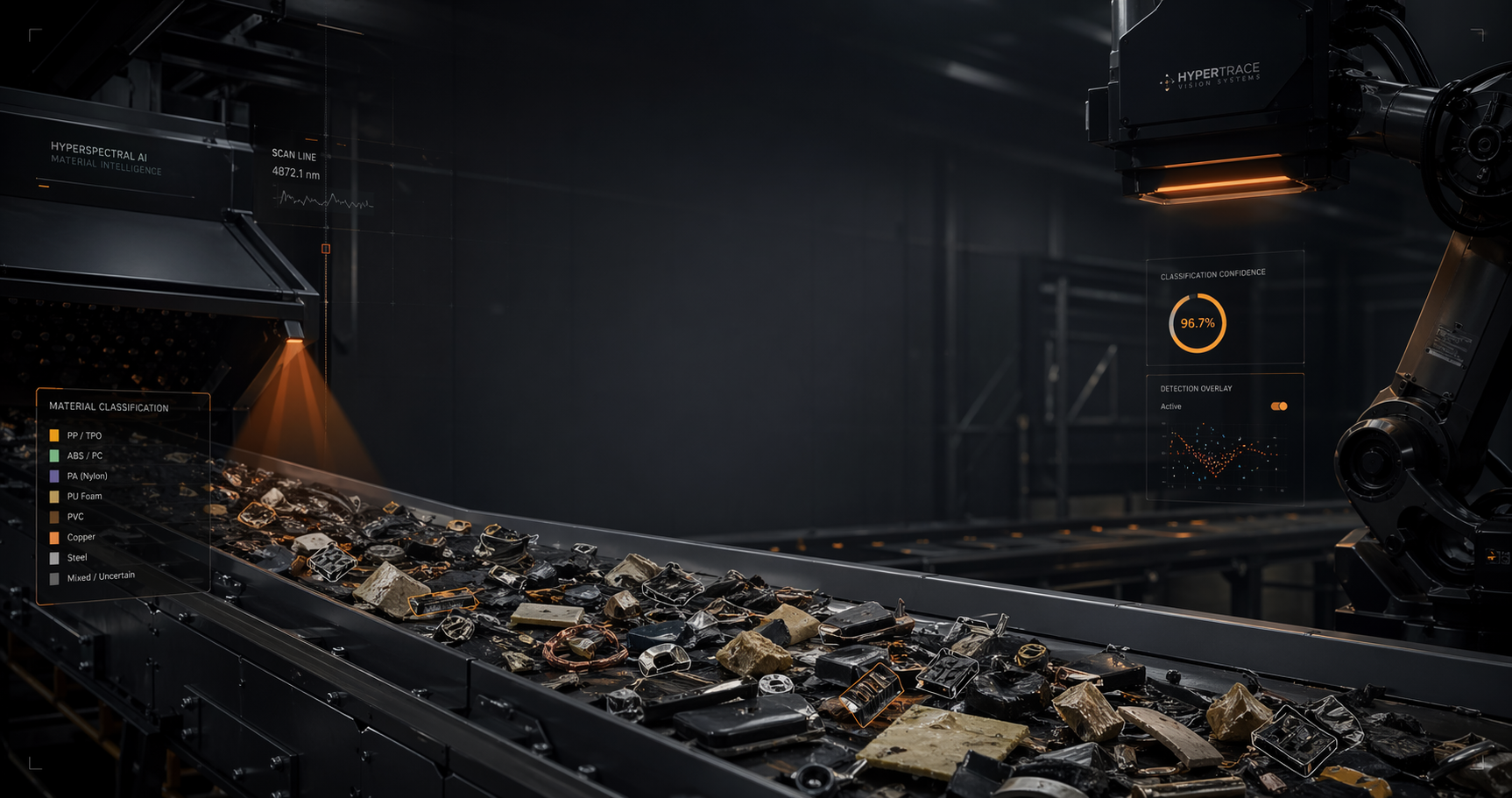
What Clarity Recover changes on the line.
Start with the material and operating decision that matter to your plant. Clarity Recover handles the sensing, analysis, and real-time classification needed to act on it.
Find valuable fractions
Identify target polymers, coated materials, foams, and shredder-derived fractions that look alike on the belt.
Separate them in real time
Run classification at the line speed and in the deployment environment required by the operation.
Prove the recovery case
Review detection footage, classified output, and the value path before committing to a larger deployment.
Material value is hard to recover when composition is invisible.
What gets in the way
Automotive recycling streams often contain mixed polymers, coatings, foams, textiles, composites, and shredder-derived fractions that look similar on the belt but carry very different downstream value.
How Clarity Recover helps
Clarity Recover learns the material signatures that matter to your operation, classifies them in real time, and connects each detection to the physical sorting action on the line.
Identify composition, not appearance
Distinguish materials that share a color or shape but have different recovery value.
Adapt to your material mix
Configure the solution around the target fractions, contaminants, and presentation conditions on your line.
Validate before deployment
Test representative material and review the recovery opportunity with operations, engineering, and commercial teams.
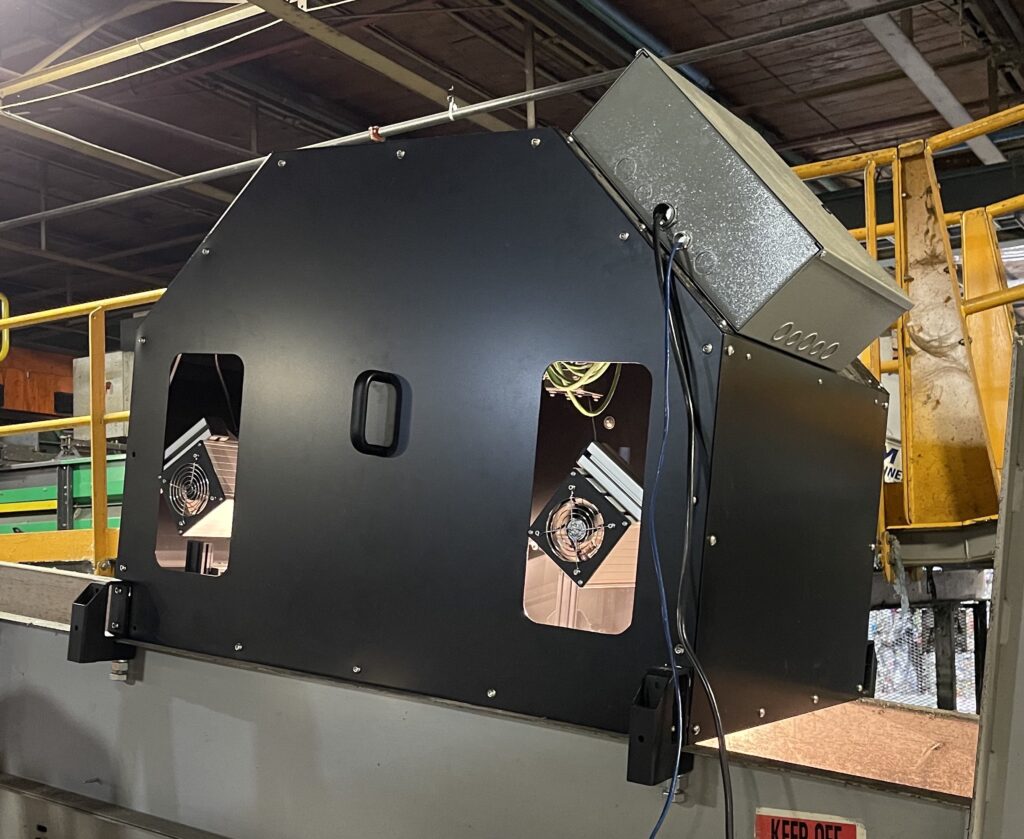
Run representative material through Clarity Recover and see the detections, class confidence, sorted output, and commercial opportunity tied to your target fractions.
Start With Your MaterialSee it work on your material.
Define the target, test the real stream, and review whether the result supports a pilot or deployment.
STEP 1 — Define Target Fractions
Identify the parts, polymers, or shredder-derived fractions your team wants to recover, characterize, or separate more reliably.
STEP 2 — Run Stream Assessment
Scope the test around your material sample, conveyor conditions, and the downstream workflow that matters.
STEP 3 — Review the Business Case
Review the measured result with operations and commercial teams, then decide whether to expand testing or move toward deployment.
Questions teams ask before getting started
What material inputs do you need?
A representative sample of the automotive fractions you want to evaluate, plus basic context on conveyor conditions and downstream handling.
What does a material test deliver?
Detection footage, classification context, stream characterization, and a practical next-step recommendation.
How is success measured?
Success is scoped around the target fractions in play, the consistency of separation, and the downstream value path your team cares about.
What happens after a successful test?
We use the measured results to define whether the next step should be expanded testing, pilot planning, or deployment scoping.