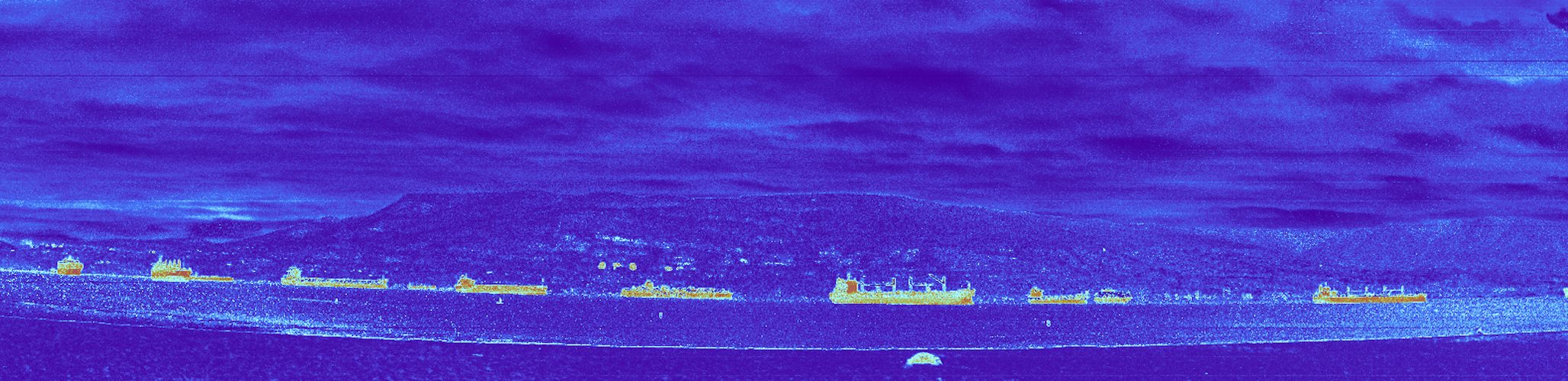
Reduce the search area without creating more analyst noise.
Clarity AI brings data selection, spectral analysis, scientific review, and secure deployment into one mission-oriented solution.
Surface difficult signatures
Detect material and anomaly signals that may be weak, concealed, mixed, or visually ambiguous.
Focus analyst attention
Rank detections and preserve confidence context so teams can spend review time on the most relevant areas.
Operate within your boundary
Run in a private cloud or on premises, with workflows and provenance retained inside the approved environment.
From mission question to reviewable detection.
1Select data that fits the mission
Assess whether available satellite, airborne, drone, or owned imagery has the spectral and spatial information required for the target and environment.
2Use the right analytical methods
Combine classical detection, library matching, patented spectral unmixing, and trained models within a workflow designed around the mission criteria.
3Preserve analyst and scientific review
Build the workflow with your technical team or ours, then retain the source data, parameters, intermediate outputs, and review history behind each result.
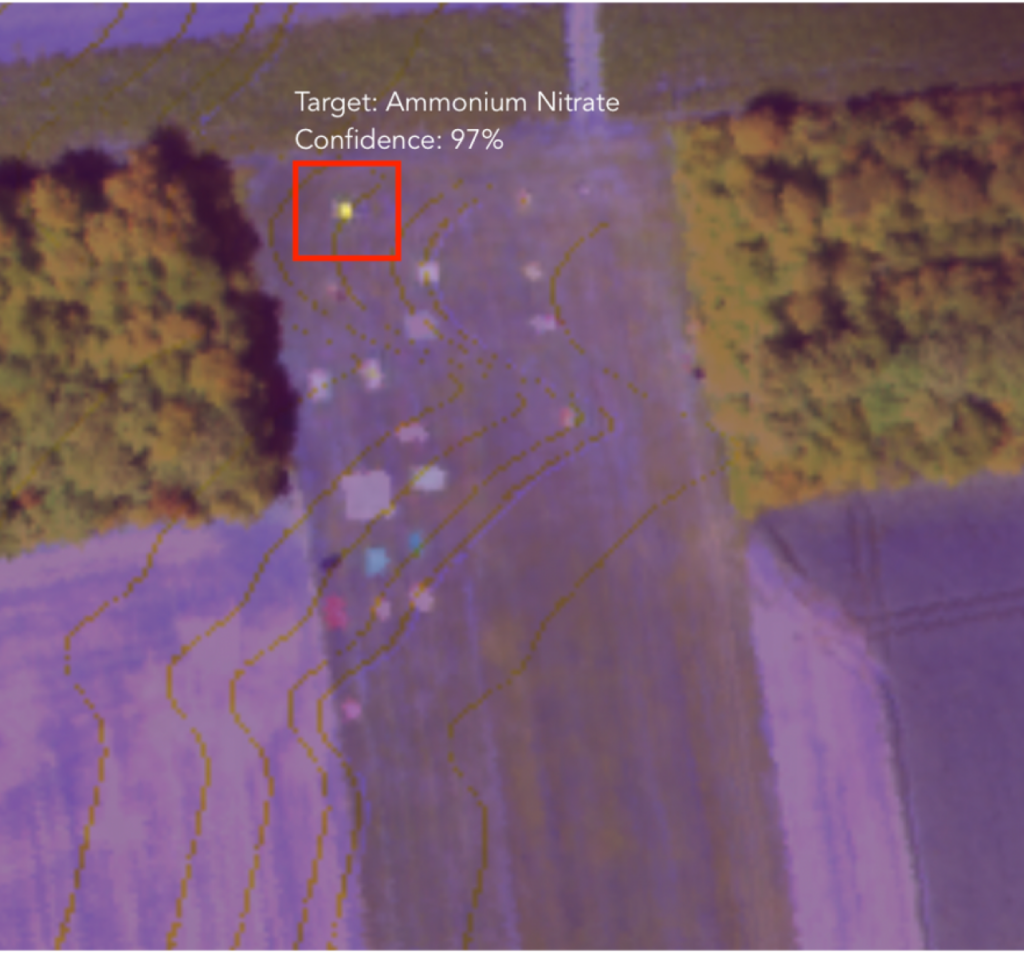
An anomaly map or detection layer with supporting spectral evidence, confidence, provenance, and an analyst summary matched to the mission decision in scope.
Discuss a Mission Use CaseBuild around the mission and its constraints.
Define what must be found, establish whether the data can show it, and validate the workflow before operational use.
1. Define the Mission Question
Specify the target, environment, prior evidence, review criteria, and operational decision.
2. Assess Data and Boundaries
Select suitable data and define the deployment, access, and security constraints the workflow must respect.
3. Validate the Workflow
Compare detections with known evidence, measure analyst value, and approve the path into operational use.
Questions teams ask before getting started
Can Clarity AI work with our existing data?
Yes. We can assess hyperspectral satellite, airborne, drone, or customer-provided imagery against the target, environment, and mission criteria before selecting the analytical path.
What does a mission project deliver?
A package with an anomaly map or detection layer, analyst-ready context, spectral evidence, and a next-step recommendation tied to the mission objective.
How is success judged?
Success can include rare or hidden target detection, false-positive reduction, analyst time saved, decision usefulness, output quality, and fit with the mission review workflow.
What is the minimum dataset needed?
That depends on the target and environment, but we can usually define a practical starting scope around a representative mission dataset.
Can this fit our existing workflow?
Yes. Clarity AI can run in a private cloud or on premises and can be configured around your review process, security constraints, and existing decision workflow.