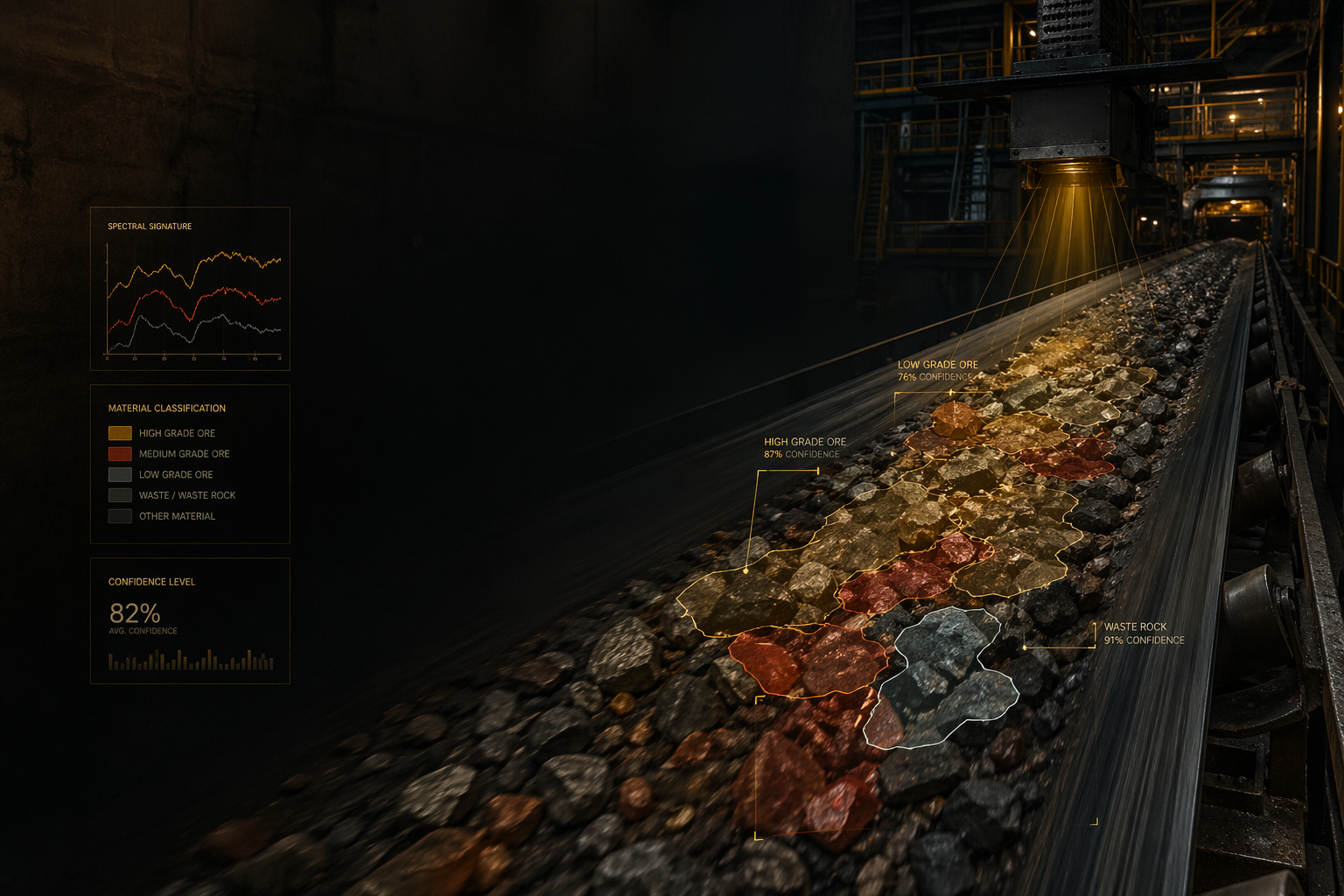
What Clarity Recover changes on the line.
Start with the material and operating decision that matter to your plant. Clarity Recover handles the sensing, analysis, and real-time classification needed to act on it.
Characterize material in real time
Identify the material classes that affect feed quality without waiting for delayed downstream confirmation.
Act earlier in the process
Support diversion, blending, and feed-control decisions closer to the point of handling.
Adapt to site conditions
Tune classification and deployment to the materials, presentation, throughput, and infrastructure at your operation.
Feed variability should not reach the plant unseen.
What gets in the way
Mineral-processing workflows often rely on delayed assays, coarse proxies, or inconsistent visual inspection, even though feed variability directly affects throughput, recovery, and downstream plant performance.
How Clarity Recover helps
Clarity Recover classifies the material stream at the conveyor, then delivers the output to the control environment where diversion, blending, or process decisions happen.
Real-time stream characterization
Measure material classes on the line instead of waiting for delayed downstream confirmation.
Earlier diversion decisions
Support ore/waste separation, feed blending, and process-control decisions closer to the point of handling.
Site-specific material models
Configure the solution around the material classes, process conditions, and site constraints that define your operation.
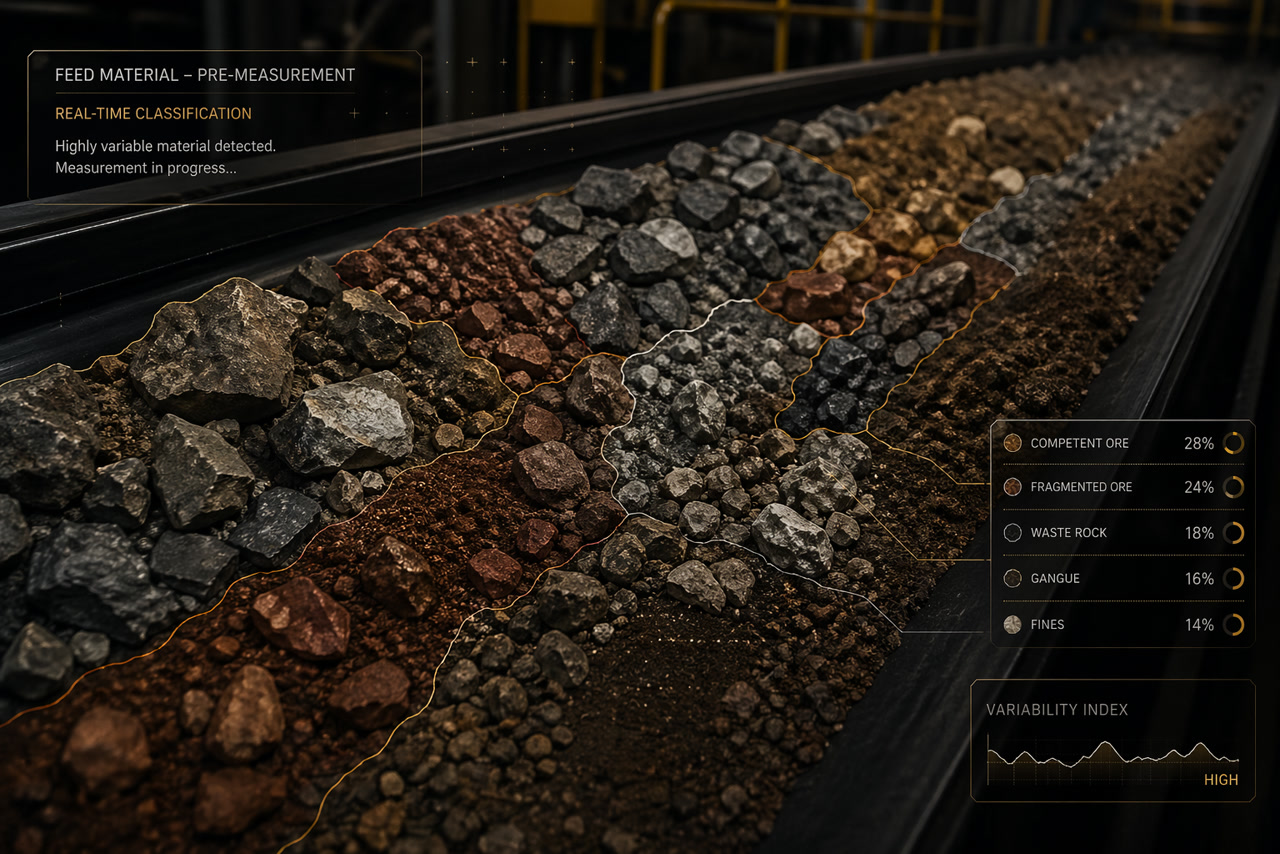
Test representative ore and waste classes under realistic presentation conditions, then review classification performance and where it can improve diversion, blending, or feed control.
Start With Your MaterialSee it work on your material.
Define the target, test the real stream, and review whether the result supports a pilot or deployment.
STEP 1 — Define Material Classes
Identify the ore, waste, gangue, or mixed fractions that matter operationally.
STEP 2 — Assess Sensor and Conveyor Conditions
Run the material test under realistic presentation conditions, throughput assumptions, and process constraints.
STEP 3 — Review the Operational Model
Use the measured results to evaluate where Clarity can support diversion, blending, or process-control decisions.
Questions teams ask before getting started
What material inputs do you need?
We start with representative material from the classes that matter on site, plus enough conveyor and presentation context to design a realistic test.
What does a material test deliver?
A package with classified output, confidence context, process-fit summary, and a recommendation for pilot or deployment planning.
How is success measured?
Success is tied to the classes in scope and to whether the output supports a practical feed-control, diversion, or blending decision.
Can this fit existing plant workflows?
Yes. The test and deployment path are scoped around your conveyor conditions, process constraints, and control workflow.